


Ferragamo Premium Crossbody Spring Collection
Buying Ferragamo Bags Safely: Channel by Channel
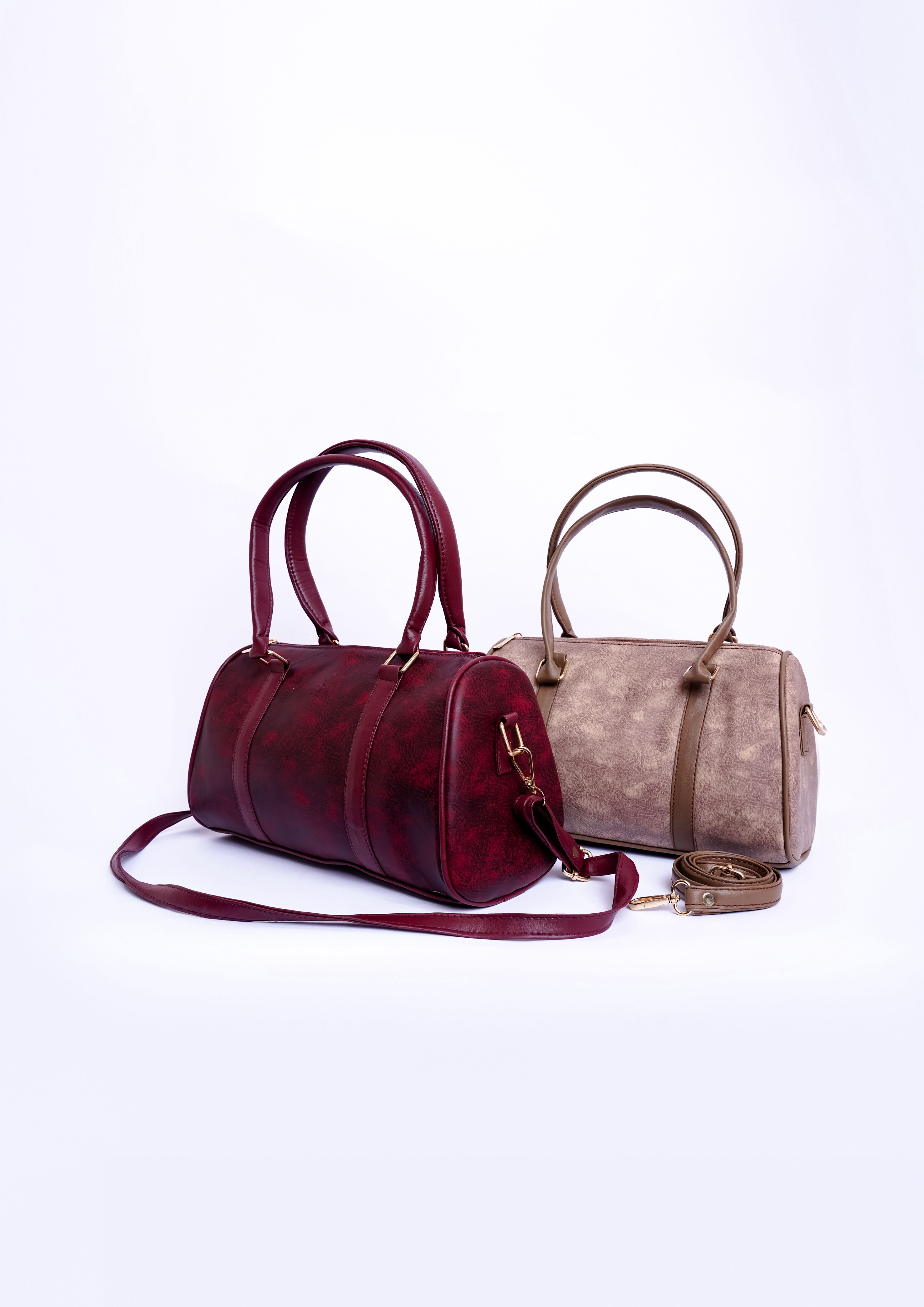
Buying a Ferragamo bag is straightforward; buying one safely costs about ten minutes of care. Because the house keeps to a short and legible set of channels, the disappointments buyers report nearly always begin outside that set. This guide walks each legitimate route: the brand’s own webstore and boutiques, a short handful of verified stockists, brand-operated stores located in outlet villages, and the pre-owned platforms. It then sets out how fraudulent outlet sites are constructed, so you can spot the pattern without carrying a list of addresses. Every dollar figure below is an observed 2026 market price, captured in September 2026 from the brand’s own US webstore and one large resale platform. Prices change and assortments rotate, so the logic matters more than any single number.
Start With the Brand’s Own Shop and Boutiques
The safest purchase is the least exciting one: the brand’s own regional webstore, or one of the roughly 354 stores in its official locator. Ferragamo tells customers to buy only through its website or through authorised stores and distributors, which makes the first-party channel the benchmark for everything else. A Ferragamo shop also offers what no third party can replicate, specifically handbag collection initials personalisation in select boutiques and Repair Services for a selection of authentic products. You lodge a repair request at selected stores with proof of purchase, and it holds valid regardless of where the bag was bought. The spine is built from first-party prices, and observation gave a calfskin Hug XS at $2,600, a python Gancini handbag in medium at $4,100, and a small wicker Iconic Top Handle at $4,800. Another seller sitting far under that reference on a current-season piece has quietly told you the story with the number.
Verified Stockists and What Their Numbers Tell You
Beyond the brand’s own channel, a small set of retailers was verified as selling the bags: Nordstrom, Bloomingdale’s and Saks Fifth Avenue, plus Mytheresa and Farfetch online. Authorised stockists hold recommended retail price instead of writing their own, and observation bore out it, since one listed the Hug East-West small at $2,500 and the medium raffia Hug at $3,400, both matching the brand’s own figures. That correspondence is a test you can run in two browser tabs. Aggregators such as Lyst and Editorialist behave differently, surfacing third-party listings in converted currencies, so their numbers often diverge from official pricing without anything being wrong. There are also discount-oriented sellers including ShopSimon, Giglio and Vitkac, which indicate nothing improper in themselves; they are simply not the brand speaking. Treat the verified list as an allow list, and everything outside it as a claim you have to check.
| Channel | Description | How prices moved in 2026 | What requires checking |
|---|---|---|---|
| Brand webstore and boutiques | First-party sales, about 354 stores in the locator | Full retail pricing, and seasonal sale sections | No check needed; this sets your reference price |
| Checked third-party stockists | Nordstrom, Bloomingdale’s, Saks Fifth Avenue, Mytheresa, Farfetch | Matches brand pricing, such as Hug East-West small at $2,500 | That the listing is on the retailer’s own storefront |
| Outlet-village stores | Brand-run stores sited inside physical outlet centres | Marked down in store, with nothing published about the policy | That you are standing in the store |
| Pre-owned platforms | Rebag, Fashionphile, The RealReal | Hug pieces $1,890 to $2,930; archive styles $500 to $945 | The condition grade, the photographs and the return window |
| Sites that market themselves as an online outlet | A channel that the brand does not operate | Implausible cuts on current-season bags | No check needed; close the tab |
Outlet Villages Are Real, an Online Outlet Is Not
This is the most useful structural fact for anyone hunting a Ferragamo sale. Brand-operated stores do exist inside outlet villages, verified at The Mall Firenze in Reggello near Florence and across more than a dozen Simon Premium Outlets, among them Woodbury Common, Desert Hills, Las Vegas North, Orlando Vineland, Wrentham and Toronto. Here is the nuance: the brand’s own store locator labels none of them an outlet, because they are just stores that happen to sit inside outlet centres. Online, the only official discount channel is the seasonal sale section on the brand’s own site, which shows for women’s and men’s ranges and switches off between seasons. During research in early September 2026 the US sale path redirected to the country selector and no sale link appeared in live navigation, just as a closed section behaves. An official online Ferragamo outlet does not exist, and nobody outside the company can honestly quote a sale calendar or a discount depth either.
How Fraudulent Outlet Sites Are Built
Accept that no official online outlet exists and the scam pattern falls into place. The template pairs the brand name with a reassuring noun such as outlet, sale, official or store, then builds a storefront around lifted official product photography, which is why the pictures look right while everything around them feels thin. The pricing gives the second tell away, as current-season bags marked seventy to ninety per cent down appear in no authorised channel. The third tell is paperwork: credible company details, a registered address and a workable returns process are rarely there. None of those signals is conclusive alone, but the structural one is, since a site presenting itself as the brand’s online outlet has already told you it is not the brand. Run that test first, and only then check the seller against the verified list.
What the Brand’s Own Enforcement Numbers Reveal
The company’s own Brand Protection reporting makes the scale concrete if it feels abstract. Ferragamo reports, for 2022 alone, 107 fraudulent websites removed, 89,136 counterfeit product listings taken down from e-commerce sites, over 2,000 infringing social media profiles removed, and over 90,000 counterfeit products seized globally. Those are published figures for a single year, describing an industrialised category rather than scattered accidents. Two things follow for the buyer. Polish and plausibility prove nothing, because 107 removals in twelve months implies a steady supply of polished, plausible sites. Social listings deserve the same scepticism as websites, given how many infringing profiles came down in the same period. What to do about it is what the company itself recommends, namely buying from its own site or from authorised stores and distributors.
Authenticity Claims That Should Slow You Down
One red flag is worth singling out, since it cuts against instinct. Ferragamo does not publish an authentication guide, and it documents no consumer-facing serial-number or authenticity-card scheme for its bags. Claims that its bags carry serial numbers, date codes or cards with holographic numbers come from resale and consignment blogs rather than from the company, so treat them as third-party consensus. When a seller leans on an official authenticity card or a brand serial number, they are invoking something the brand does not publish, so it counts as a warning sign rather than reassurance. There is a two-part product code on every current bag page, a style code alongside a variant code such as 215975 768853 on the Hug XS, but what it identifies is model and colour, not a single unit. Experienced buyers read soft signals instead: stamp crispness and spacing, Gancini hardware casting and weight, stitching evenness, leather hand-feel, and the white dust bag with its red drawstring. Not one of those is brand-published, and Repair Services remains the only official in-person touchpoint.
Pre-Owned: an Honest Trade-Off
Pre-owned is a legitimate option, and for archive models it is the only one, because Trifolio, the older Sofia, Fiamma and Ginny have dropped out of the US line-up. Most authenticated consignment sits with Rebag, Fashionphile and The RealReal, while eBay, 1stDibs and Vestiaire cover the wider secondary market; every one of them still files the label under Salvatore Ferragamo, so search salvatore bags when results look thin. Observed 2026 resale pricing shows a hierarchy, with a large suede Hug shoulder bag in excellent condition at $2,930 against $4,300 at retail, and a large leather Hug top handle in very good condition marked from $2,425 down to $1,890. Around $700 to $1,250 you find Studio and Gancini-hardware pieces, while pre-2020 utility styles establish a floor near $500 to $945. The trade-off is easy to state: real money saved, the boutique’s guarantees surrendered, and all the weight landing on condition grading, photographs and the return window. Judge the platform’s process with the same care you apply to the bag.
A Ten-Minute Drill to Run Before You Pay
Run the same sequence every time and most of the risk evaporates. Start at the brand’s own shop, find the model, and write down its official price, since that is your control. Confirm the seller is the brand, a verified stockist, or a pre-owned platform you chose deliberately. Ask whether the site is presenting itself as an online outlet; if the answer is yes, close it. Weigh the discount against reality, because authorised sellers hold retail, which makes a seventy per cent cut on a current-season feragamo bag, a misspelling these sites buy traffic on, a fabrication rather than a bargain. Take any promise of an authenticity card or serial number as meaningless, since in published brand documentation that is exactly what it is. Work through those steps and you are buying through the very channels the company points customers toward.


